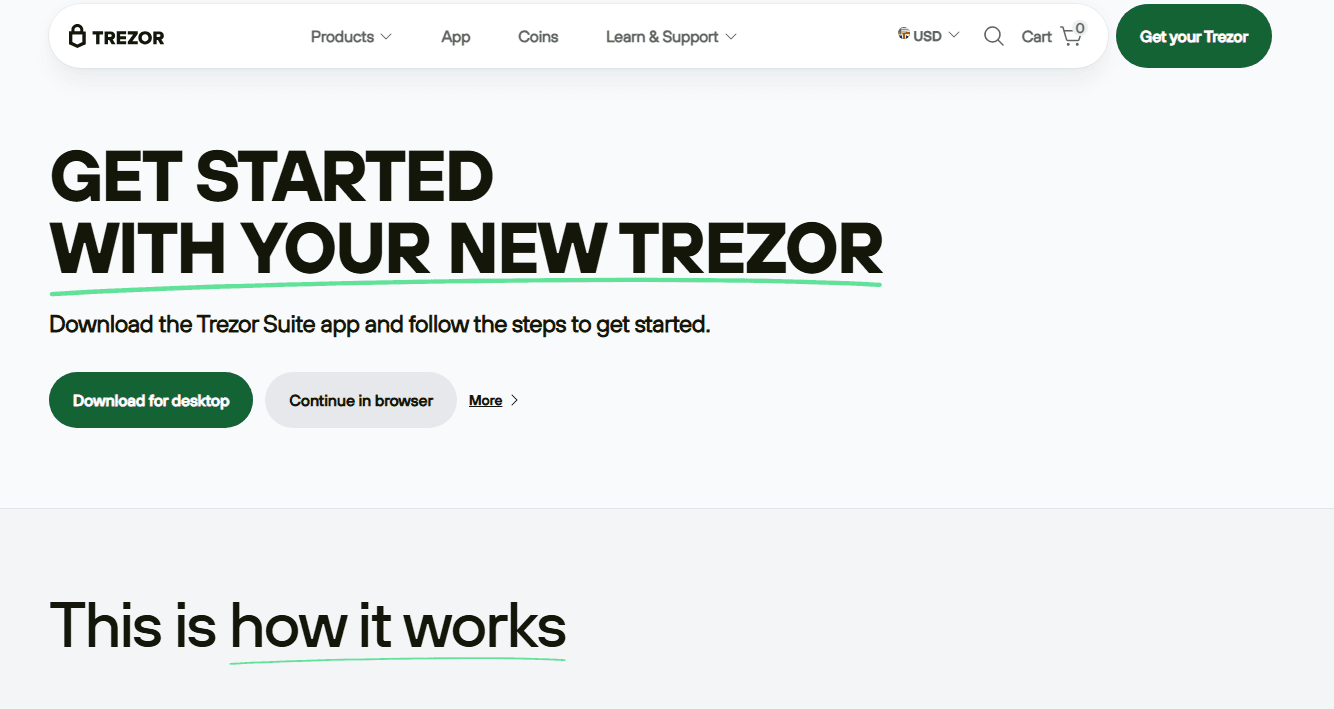
Trezor Suite — Fresh 1200-Word Overview (Entirely New Content)
Trezor Suite is the official software environment designed to work hand-in-hand with Trezor hardware wallets. While the hardware wallet protects private keys by keeping them offline, Trezor Suite provides the interface where users manage account details, review activity, adjust security settings, and interact with various blockchain networks. More than a simple application, Trezor Suite is an example of how modern secure software can be built around user protection, transparency, and ease of use.
This 1200-word overview explores Trezor Suite from an educational, technology-focused perspective—ideal for learning about cybersecurity concepts, privacy models, and digital asset architecture.
1. The Vision Behind Trezor Suite
Trezor Suite exists because hardware wallets need a safe and consistent digital environment to operate effectively. A hardware wallet alone is secure but limited; it cannot display all information or manage complex tasks. Trezor Suite becomes the bridge between the cold (offline) world of keys and the online systems they interact with.
The creators of Trezor Suite set out to design a platform that:
Reduces risks associated with using web browsers
Gives users clear visibility into their device and activity
Encourages safer digital habits
Prioritizes privacy-conscious design
Empowers users with full ownership of their cryptographic information
It’s not simply a companion app. It represents an entire philosophy of user-first security.
2. The Core Structure of Trezor Suite
Trezor Suite is organized into several major components that work together:
A. Dashboard
The home screen that provides a general overview of accounts, notifications, device status, and suggestions.
B. Account Panels
Sections where users can view activity history, addresses, and analytics tools.
C. Device Manager
The control center for firmware, backups, PINs, naming, and security features.
D. Security Hub
A dedicated area that evaluates risks and offers protection-related guidance.
E. Settings & Preferences
Tools for customizing privacy preferences, network behavior, appearance, and performance.
By dividing responsibilities among these areas, Suite creates a structured environment where users rarely feel overwhelmed.
3. A User Interface Designed for Clarity
One of the most distinctive qualities of Trezor Suite is its visual clarity. Everything is designed to reduce confusion, a crucial factor in cybersecurity. When users understand their tools, they make fewer mistakes.
The interface uses:
High-contrast elements
Organized sections
Clear labels
Icons for each type of action
Step-by-step prompts for sensitive operations
This visual simplicity helps users recognize important information instantly. Even people new to digital assets can interpret most sections without needing a technical background.
4. How Communication Works Between Suite and the Device
The way Trezor Suite interacts with a Trezor hardware wallet is one of its most important innovations.
The process works like this:
The Suite sends a request to the hardware wallet.
The device displays the required action on its screen.
The user verifies and confirms on the device itself.
Sensitive operations are executed inside the device’s secure chip.
The device sends only the result, not the private key, back to the Suite.
This method prevents unauthorized software from impersonating commands or stealing private information. It also teaches users a crucial principle: online devices can be compromised, so verification should happen offline.
This concept—called external signing or air-gapped signing—is a cornerstone of secure cryptographic handling.
5. Account Structures and Activity View
Within Trezor Suite, each “account” acts as a container for blockchain interactions. Although these accounts originate from a single seed (the recovery phrase generated by the hardware wallet), the Suite separates them for easier organization.
Account features include:
Unique labels
Individual activity lists
Separate address generation
Independent analytics charts
Archived account handling
Users can switch between accounts easily, learning how hierarchical deterministic (HD) wallets work. HD wallets are systems where many addresses can stem from the same cryptographic root without exposing the private key.
This is one of the foundational ideas behind decentralized networks.
6. Visual Analytics and Portfolio Insights
Trezor Suite includes visual tools that help users interpret blockchain activity. These displays include:
Pie charts showing distribution among supported assets
Historical graphs tracking changes over time
Line charts illustrating long-term patterns
Time filters that allow users to compare behaviors across different periods
These visuals aren’t about encouraging financial decision-making; they help users grasp concepts such as volatility, distribution, and long-term trends—important topics in digital economics and decentralized technologies.
For learners, these graphics make abstract blockchain behaviors easier to understand.
7. The Security Hub: A Dedicated Protection Zone
One of the most important sections in Trezor Suite is the Security Hub, a focused area that evaluates safety conditions. Rather than hiding protections behind menus, Suite brings them front and center.
The Security Hub may highlight:
Missing device backups
Firmware that is outdated
Weak device access protections
Important reminders for checking authenticity
Tips on improving privacy settings
This area evolves as the user strengthens or weakens their device configuration. By providing these alerts, Trezor Suite teaches users about proactive security—the idea that digital safety requires regular attention.
8. Privacy Philosophy and Tools
Privacy is a defining characteristic of Trezor Suite. Instead of collecting unnecessary user data, the software:
Stores sensitive information locally
Gives users control over network pathways
Warns against behaviors that reveal public activity
Encourages address rotation to reduce traceability
These features demonstrate how software can respect user autonomy while still offering functionality. Unlike many modern apps that track user behavior for marketing or analytics, Trezor Suite is intentionally minimalist in data collection.
This makes it a strong example of privacy-focused design for anyone studying cybersecurity.
9. Firmware and Device Updates Through Suite
Although the hardware wallet performs cryptographic tasks independently, firmware updates must be applied periodically to improve security and add features.
Trezor Suite plays an essential role by:
Notifying users when an update is available
Providing clear descriptions of what the update includes
Verifying authenticity
Handling the installation process safely
This educates users about the importance of maintaining up-to-date software, a key digital safety habit.
10. Notifications: Staying Informed Without Overwhelm
Trezor Suite uses notifications sparingly and only when necessary. These alerts may indicate:
Device connection status
Security suggestions
New features or improvements
Required verifications
Detected risks or potential issues
Rather than overwhelming users, Suite’s notification system prioritizes relevance. This demonstrates effective UI design—giving the user just enough information to act safely without causing stress or confusion.
11. Open-Source Development
One of the most remarkable aspects of Trezor Suite is that it is fully open source. This means:
Developers worldwide can examine the code
Researchers can audit it for security flaws
The community can contribute features
Problems are fixed publicly
Trust is earned through verification, not secrecy
Open-source development encourages better safety because the code is constantly reviewed by independent experts. It also reflects a philosophy of transparency, especially important in industries involving cryptography and privacy.
12. A Learning Platform for Understanding Decentralized Tech
Even without using the Suite for personal finance, it is a powerful educational tool. Through its design, users can learn:
How cryptographic keys work
Why offline storage is secure
How blockchain addresses behave
What decentralized verification means
How layered security models function
Why privacy settings matter
How signing and verification take place
For anyone studying modern cybersecurity, Trezor Suite is a real-world example of safe software design.
13. Final Reflection
Trezor Suite is more than a companion application—it is a complete security ecosystem. Its emphasis on clarity, transparency, and protection makes it stand out among digital tools. By providing an environment where hardware wallets can operate safely, the Suite teaches important lessons in digital responsibility and privacy.
Every part of its design—from its user interface to its open-source philosophy—shows how technology can empower users rather than confuse or exploit them. Whether someone is learning about cybersecurity, decentralized systems, or privacy engineering, Trezor Suite offers a model worth studying.