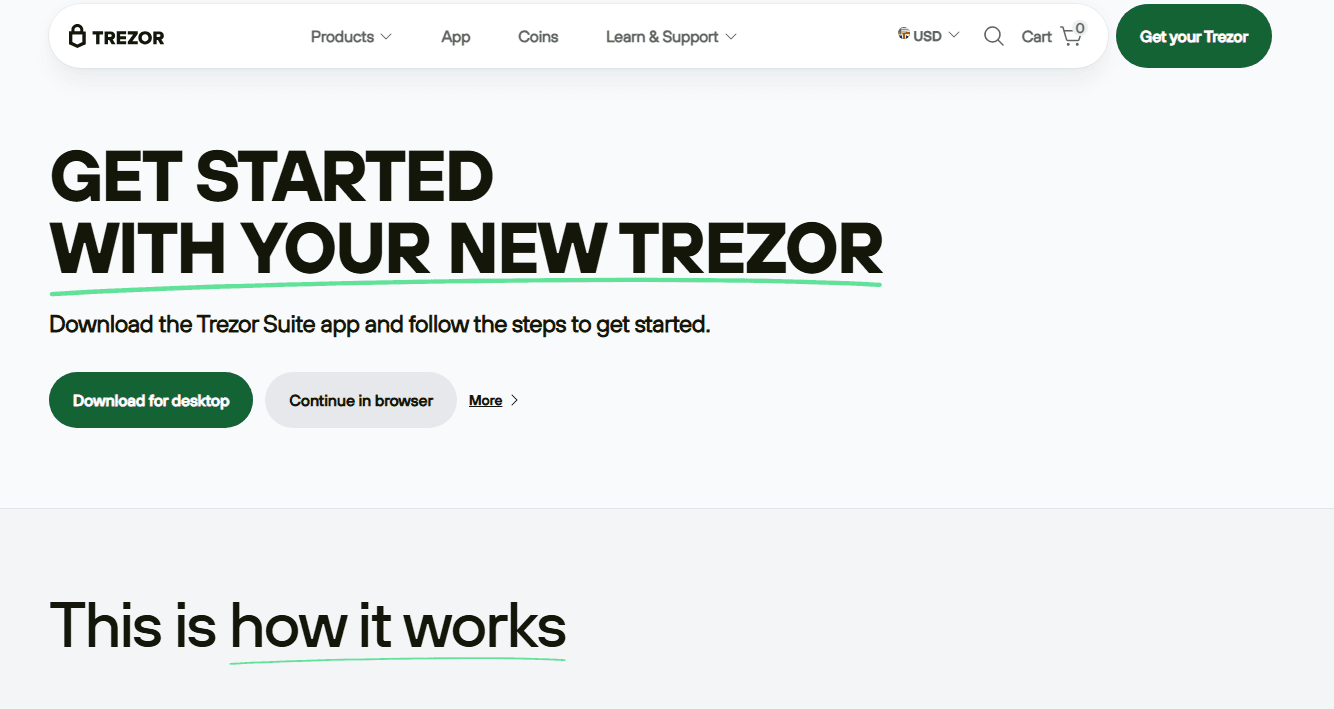
Trezor Suite — A Fully New 1200-Word Overview
Trezor Suite is the central software platform created to work alongside Trezor hardware wallets, serving as the user’s main hub for device management, security settings, and digital asset organization. It is designed with a strong focus on transparency, privacy, and safe interaction with decentralized systems. Even for people who aren’t involved in cryptocurrency, Trezor Suite is an excellent example of modern cybersecurity principles applied in an accessible way.
This new 1200-word breakdown explores how Trezor Suite is structured, the philosophy behind it, its interface, and the safety mechanisms that define its purpose.
1. The Purpose of Trezor Suite
Trezor hardware wallets operate offline, but users still need a secure way to view information, adjust settings, and interact with blockchain networks. Trezor Suite fills this role by offering a standalone application that communicates with the hardware wallet safely and privately.
The core idea is simple:
Keep the keys offline, keep the interface secure, and give the user complete control.
Unlike many digital tools that rely heavily on online servers, Trezor Suite emphasizes local data handling and user autonomy. It’s intentionally designed to avoid unnecessary data collection, making it a powerful model of privacy-conscious software.
2. A Unified Space for Device and Account Management
Before Trezor Suite existed, many crypto users relied on browser-based methods to interact with hardware wallets. Browsers are convenient but vulnerable to malicious extensions, phishing pages, and other online threats. Suite solves this by delivering everything in one dedicated application.
Its unified structure includes:
A device manager
Account overview panels
Security dashboards
Transaction viewers
Settings for privacy and network management
Visual tools for understanding portfolio changes
Backup and verification modules
Putting all of these in one environment reduces the risks that come with jumping between multiple tools.
3. How the Interface Is Organized
Trezor Suite’s layout is built to minimize confusion, using a clean, panel-based structure. Although the details vary depending on what a user connects, the interface typically features:
A sidebar containing navigation options
A central content window showing accounts or device information
A notification area for security warnings or updates
Icons indicating connection status and safety conditions
The design is intentionally calm and uncluttered. It emphasizes clarity, making complex crypto-related information easier to interpret.
This approach reflects a key concept in cybersecurity design: simple interfaces reduce user mistakes, which increases safety.
4. Understanding Accounts in Trezor Suite
Inside Trezor Suite, the concept of an “account” refers to a specific path on the hardware wallet that generates addresses and tracks transaction history. Each account is organized into its own section, making it easier for people to keep their information separated.
Accounts within the Suite support:
Distinct names and labels
Organized transaction histories
Visual graphs showing activity
Clear address generation and verification processes
This structure teaches users about deterministic wallets — systems where many addresses can be created from a single private key without exposing that private key. It’s a fundamental concept behind modern cryptographic systems.
5. Device Management Features
Beyond account viewing, one of Trezor Suite’s most important purposes is to manage the hardware wallet itself. Through the device management section, users can see:
Whether the device is connected properly
What firmware version is installed
Whether backups have been verified
If a PIN or passphrase feature is enabled
Security suggestions specific to the device’s state
Every important action must be confirmed physically on the Trezor device. This ensures that malicious software on the computer cannot secretly issue commands. The “verify on device” model is a practical example of zero-trust principles, one of the most important trends in cybersecurity.
6. The Security Dashboard
Trezor Suite includes a dedicated security dashboard that evaluates the user’s setup and highlights potential risks. Instead of hiding safety details deep in menus, the Suite brings them to the front.
The dashboard may highlight:
Backup reminders
Firmware update suggestions
Best-practice recommendations
Alerts about suspicious settings
Warnings about missed protections
By constantly helping users maintain a safe environment, Trezor Suite functions as both a tool and a teacher. It encourages responsible digital behavior in the same way a well-designed antivirus program offers guidance.
7. Privacy Tools and Network Controls
In many applications, privacy is an afterthought. By contrast, Trezor Suite treats privacy as a core design component, offering tools that let users control how they interact with blockchain networks.
Some examples include:
A. Adjustable Network Settings
Users can choose how they want to connect to the networks their assets operate on. This allows them to increase privacy or adjust performance.
B. Local Data Focus
Personal information stays on the device, not on centralized servers. This aligns with the principles of self-custody and decentralization.
C. Address Management
The Suite helps users avoid address reuse—a common mistake that can reveal information about a person’s activity.
Whether someone is engaged in crypto or simply learning about privacy, these features demonstrate how digital tools can limit data exposure.
8. How Trezor Suite Communicates With the Hardware Wallet
Although Trezor Suite looks like a typical application, the way it interacts with the hardware wallet is very structured and secure.
Here’s how the communication works conceptually:
The computer sends a request to the hardware wallet.
The wallet checks the request and requires user confirmation.
The device performs cryptographic signing internally.
The result is sent back to the Suite without exposing private keys.
This process ensures the private keys — the cryptographic “master keys” controlling ownership — never leave the hardware wallet. Even if the computer were compromised, the keys remain protected.
This “offline signing” model is one of the most important ideas in securing digital assets, and Trezor Suite is a real-world example of how it can be implemented.
9. Portfolio and Visualization Features
Many people find raw blockchain data difficult to interpret. Trezor Suite solves this by offering visual charts and summaries that make activity easier to understand.
These visual tools show:
Asset distribution
Historical value patterns
Recent activity timelines
Changes over different time periods
By seeing trends visually, users learn concepts like volatility, long-term vs. short-term patterns, and diversification principles. Even without participating in trading, viewing this information helps people understand how dynamic and global digital markets can be.
10. Alerts, Updates, and Guided Maintenance
Another important feature of Trezor Suite is its proactive approach to maintenance. The software regularly checks the hardware wallet’s status and lets users know when actions are needed.
Notifications may inform users about:
A new firmware version
Recommended privacy improvements
The need to double-check backups
General safety advice
These reminders contribute to a more secure environment and reduce the likelihood of avoidable mistakes.
For learners exploring cybersecurity, this shows how software can guide users toward safer habits.
11. The Open-Source Philosophy Behind Trezor Suite
One of Trezor’s defining characteristics is its commitment to open-source development. This means the code behind Trezor Suite is publicly accessible for security researchers, developers, and community members to examine.
Open-source design benefits users by enabling:
Transparent auditing
Community contributions
Faster detection of vulnerabilities
Trust through verification instead of marketing
This philosophy contrasts with the “closed box” design of many commercial products and serves as an example of how openness can increase both trust and safety.
12. A Tool for Learning About Modern Cybersecurity
Even for teens who simply want to learn how secure systems work, Trezor Suite is a valuable case study. It brings together multiple technologies and concepts:
Hardware-based authentication
Offline key storage
Encrypted communication
Decentralized network interactions
Privacy-enhancing techniques
Zero-trust confirmation methods
The Suite demonstrates real-world applications of these ideas, giving learners a practical understanding of how security-first design works.
13. Final Thoughts
Trezor Suite is far more than a simple crypto management interface — it is a comprehensive, security-oriented application built to support safe digital asset handling. Its design prioritizes privacy, transparency, and user empowerment. By combining a hardware wallet with a reliable software companion, Trezor provides a system where users can understand and manage their digital environment with clarity and confidence.
Beyond the world of cryptocurrency, Trezor Suite stands as an example of how digital tools should approach privacy and protection: with openness, layered safeguards, and user-first design principles.